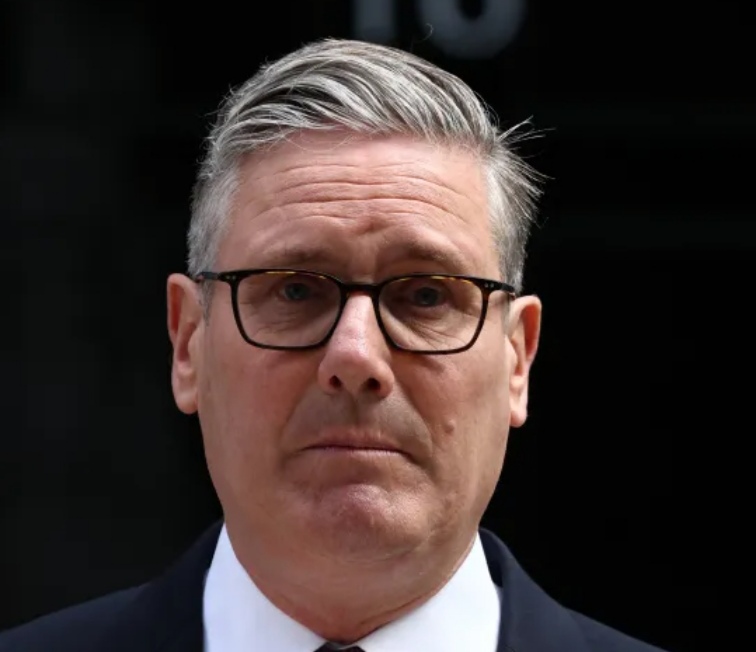
LONDON- British Prime Minister Keir Starmer has announced his resignation, less than two years after leading the Labour Party to a landslide victory in the 2024 general election, citing growing opposition within his party over its declining electoral fortunes.
Starmer disclosed his decision on Monday following months of intense pressure from Labour lawmakers and senior cabinet members who had become increasingly concerned about the party’s ability to retain power amid falling public support and the rapid rise of the right-wing Reform UK party led by Nigel Farage.
Speaking outside 10 Downing Street, Starmer acknowledged that many within Labour no longer believed he was the best person to lead the party into the next general election.
“The question my party is asking now is whether I am best placed to lead us into the next general election. I have heard the answer of my parliamentary party to that question, and I accept that answer with good grace,” he said.
His resignation comes after a series of electoral setbacks that exposed Labour’s waning popularity despite its overwhelming victory at the polls in 2024.
The situation worsened following poor performances in local council elections held in May, where Labour suffered heavy losses while Reform UK recorded major gains across several regions.
Labour reportedly lost nearly 1,500 council seats, while Reform UK secured more than 1,400 councillor positions and took control of 14 local councils.
The outcome was widely interpreted as a referendum on Starmer’s leadership and a warning sign ahead of the next general election due by 2029.
Political analysts say Labour’s declining support stemmed from dissatisfaction across different segments of its traditional voter base.
Starmer’s tougher stance on immigration failed to stem defections to Reform UK among working-class and former Conservative voters, particularly in northern England.
At the same time, some progressive Labour supporters became increasingly disillusioned with the government’s positions on welfare reforms and the conflict in Gaza, leading to criticism from within the party’s left wing.
The growing internal unrest, combined with fears that Labour could lose further ground to Reform UK, ultimately triggered calls for a change in leadership.
Starmer’s departure is expected to set off a Labour leadership contest that could produce Britain’s seventh prime minister in the last decade, with Greater Manchester Mayor Andy Burnham widely tipped as a leading contender to succeed him.