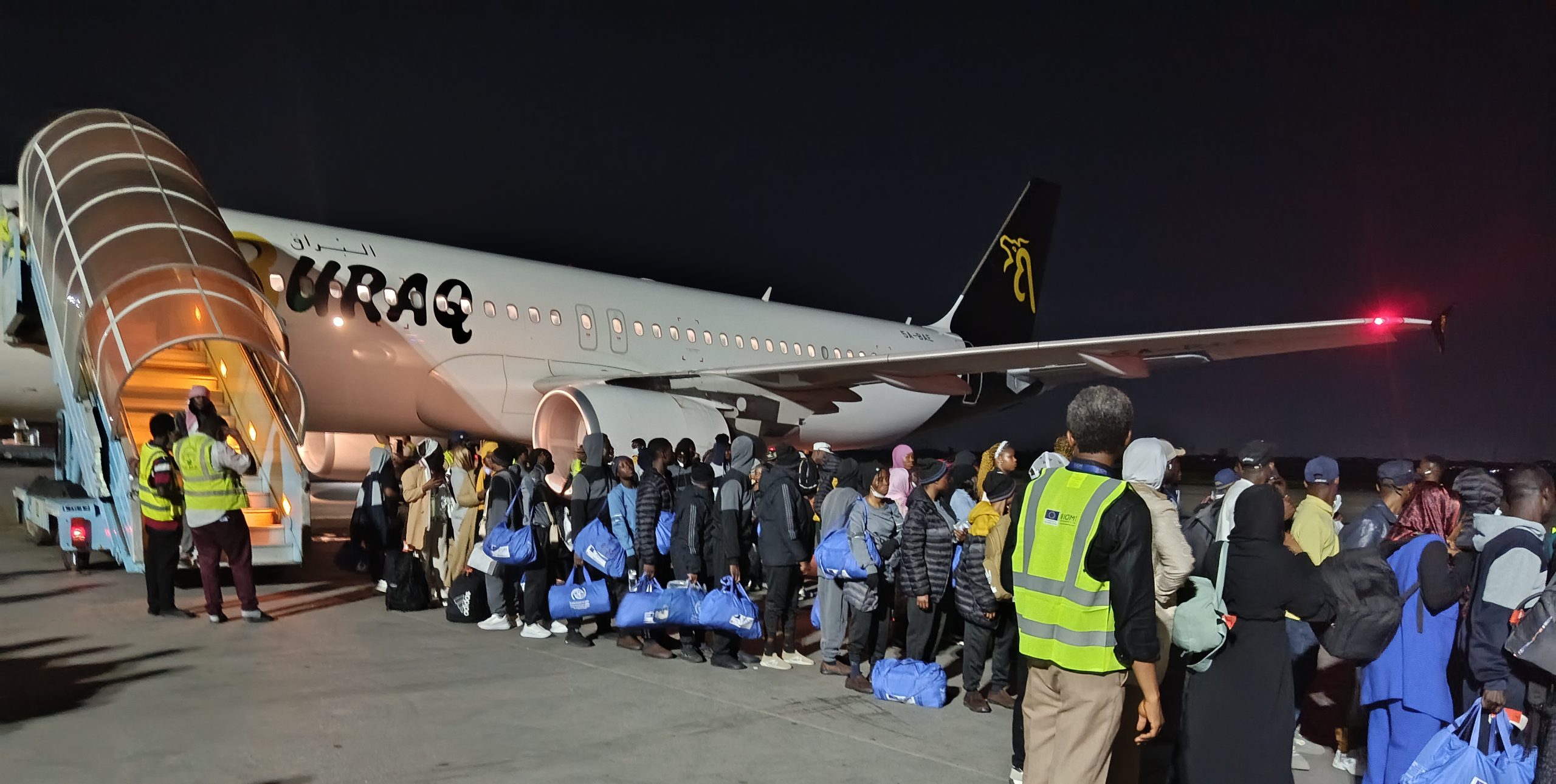
Among the 182 Nigerians who arrived home from Libya on Tuesday night were two children whose return carried a deeper story of the dangers faced by irregular migrants.
Unlike most of the returnees welcomed at the Murtala Muhammed International Airport, Lagos, the two minors arrived without their parents, highlighting the human cost of perilous migration routes that continue to claim lives, separate families and leave vulnerable children exposed to uncertainty.

Officials of the United Nations International Organization for Migration (IOM), which facilitated the voluntary return of the stranded Nigerians, described the presence of the unaccompanied children as a stark reminder of the risks associated with unsafe migration. The children were among 123 females and 59 males brought back from Libya under the IOM Assisted Voluntary Return and Reintegration Programme, funded by the European Union in partnership with the Nigerian Government and other stakeholders.
Speaking at the airport reception, Head of IOM’s Lagos Sub-Office, Ali Ibrahim, said the two children returned without their parents, noting that many unforeseen tragedies often occur along irregular migration routes.
“It’s a dangerous migration route, so many things could have happened,” Ibrahim said, stressing the need for greater awareness about the dangers of irregular migration.
The returnees included 153 adults, 17 children and 12 infants. Among them were 108 adult women and 45 adult men, underscoring the increasing number of women and families caught in migration crises across North Africa.
Beyond bringing the stranded Nigerians home, Ibrahim said the IOM remains committed to helping them rebuild their lives through reintegration support programmes. According to him, returnees are provided with various forms of assistance, including education support, business grants, psychosocial services and other interventions designed to help them settle back into their communities.
He disclosed that the organisation has facilitated the safe return of 7,625 Nigerians from Libya this year alone, while more than 65,700 migrants have been assisted to return home through the programme over the years.
Describing the operation as continuous, Ibrahim said the IOM coordinates weekly charter flights as well as daily commercial flight returns through various entry points into Nigeria, including Lagos and Abuja.
For the two children who arrived home without the comfort of their parents, however, the journey does not end at the airport.
Their return serves as a powerful reminder that behind every migration statistic is a human story one often marked by separation, survival and the hope of a fresh start.